Showing posts with label assessment for learning. Show all posts

Saturday, October 5, 2019

Educational Book Recommendation - Responsive Teaching - by Harry Fletcher-Wood

The latest evolutionary discourse on cognitive learning and teaching theory. This book has a foreward by  Dylan Williams and is excellent.

Written by an experienced teacher and teacher educator, the book balances evidence-informed principles and practical suggestions. It contains:
  • A detailed exploration of six core problems that all teachers face in planning lessons, assessing learning and responding to students.
  • Effective practical strategies to address each of these problems across a range of subjects.
  • Useful examples of each strategy in practice and accounts from teachers already using these approaches.
  • Checklists to apply each principle successfully and advice tailored to teachers with specific responsibilities.
This innovative book is a valuable resource for new and experienced teachers alike who wish to become more responsive teachers. It offers the evidence, practical strategies and supportive advice needed to make sustainable, worthwhile changes. (from Amazon description)

From cognitive learning to the latest and best ways to turn AfL and any other technique into something that impacts learning of every child in the class. Its not what we do in class but how we respond to what we do in class and change the teaching to take learners further. One of the best out there currently.


Friday, November 29, 2013

Creativity for an Unknown Future - A Tool for the Curriculum

Use This Grid Strategically to Embed Creativity in Your Curriculum


To prepare children for the uncertainty of the future we need to ensure that we are promoting creativity within our curriculum. In order to do this I have curated the most commonly cited methods that help to ensure that children think creatively. 


Simply choose one of the elements to focus upon each half term. Ensure that they are securely embedded in your curriculum by planning for their use carefully, including them in planning documents and sharing practice between staff during an evaluation period.

Tuesday, November 5, 2013

Educational Book Recommendation

Despite the advent of the kindle and e-books, educational books are still best bought in paper. Here is my recommendation to support your own research and development. 

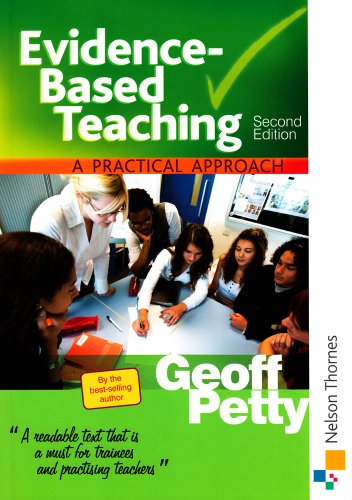
Evidence Based Teaching by Geoff Petty

"...Evidence Based Teaching is for teachers with some experience. It makes use of the most rigorous research on what has the biggest impact on achievement, and shows how to use this in your teaching..." from the EBT website 
 Geoff Petty analyses the collection of research by Marzano from America and John Hattie from New Zealand in terms of the effect on learning. You will be surprised as some common myths are shown to be not so relevant (class size, finance etc) and less surprised at the methods that are the most effective. 

This book also looks at how to make best use of these methods and further how to conduct evidence based research in your own classroom so that you improve the learning of the your children. For anyone with a thirst for more educational insight. Easy to access and understand. This is a must for anyone's educational library. 


Friday, April 27, 2012

Formative Assessment in ICT Part 2 (3 Phase Rubric Use)

This post builds upon the previous post: Formative Assessment in ICT. Following the implementation of a new framework in the top two years of the primary school, and training based around building websites, webpages and using and making a blog, I knew that I needed to introduce Formative Assessment to bring the whole thing to life. This became especially important as the ICT suites in the school were set up in rows and therefore the environment imposes very traditional (read here old fashioned) methods of delivery onto the teacher. The other relevant item is that my other duties including managing the end of year reports system and setting up the timetables for the following year started to dominate my timetable.

With full timetables and training calendar, I decided upon a couple of shorter sessions in the mornings before school starts. With our early morning starts (the school day starts at 7) and teacher’s multiple commitments after school that mean that that time is taken up, the morning briefing session are the only spaces we can find. I used one twenty minute session to refresh the basics of building a webpage with a layout that fits the non-fiction genres of the two year groups (non-chronological reports in Y6 and newspapers in Y5). For the second session I focused on Formative Assessment. In particular the use of rubrics to structure a number of sessions focused upon building a webpage.

To support the planning I had created two rubrics for a building a webpage which combined success criteria from both the English framework and the  new ICT framework. In my introduction I made the point that rubrics are a tool that can be used at different stages of the learning process. The building of a webpage is a cross-curricular mini-project. It may take anything from two lessons to a couple of weeks to complete. It can be used in the introduction to the work, in the middle to assess progress and set next step targets and then, finally, as a summative evaluation tool. I have worked with the rubrics in all three ways.

How the rubrics are used is as important as when they are used. Let’s take the example of their use in the introduction. The classic method would be to display a rubric on the interactive whiteboard for all to share. Then the teacher could read through each part and explain its meaning and importance. This could work but not necessarily engage all the children in the room. Year six is particularly hard to reach at times; between the bubbling of emotions because of puberty, the clicks of special bonds of friends in the room and the minds turned towards the thoughts of going to the high school. How to engage? The answer is in group work; Vygotsky highlighted the important part socialisation plays in the construction of learning. Getting the children into groups and discussing the rubric, with a scaffold for the talk, will create better engagement. The children should be in groups of three or four. Ask the children to identify the criteria that they all know how to do. Further ask them to circle three to four things that they don’t know how to do. (It doesn’t matter that they might know it all; by asking for three to four things it removes worry from children who are further behind).  This sharing with a focus of what to look for will engage children within each group and across the classroom. It can be followed up by a brief feedback session and revision of the parts the children don’t know how to do.

Group work was discussed in this post here. Giving the children roles also facilitates better group work.  An appointed leader, a reporter and a reader would be good roles for the above.

Using the rubric in the middle part of the project enables the children to self-evaluate their own progress. I keep the structure simple: Give out one rubric per group and the children then visit each website and judge what has been achieved and what that student’s next target is. Again I like the group to record the targets in the footer of the rubric. This gives the necessary scaffolding to the exercise so it is completed correctly.

The rubric can be used successfully at the end as a final summative assessment tool. This is particularly powerful in the hands of the children as it empowers them with the understanding of what excellent practice in the particular project area is and leaves each with a target. I found through trial and error that the method of use has to be slightly different in the final phase of assessment. Children can be trusted to make judgements about their peers standard of work, particularly if you are using a rubric with different standards. Children are not able to distinguish between their close friends and the quality of their work so a more impartial system has to be set up. Over the course of one hour I asked the children to open up the website on each computer. I also placed one rubric in front of each computer and a further piece of paper to record the level. I then stood all the children up and rotated them one row (approximately four seats) around the suite. The children then sat down and judged the website against the rubric. Each child would use a pencil and mark the rubric to make a judgement about the overall best fit. Approximately seven minutes later I asked the children to record a level on the piece of paper and then to stand up. And then a second time I rotated the children around the room and the children repeated the exercise. Over the course of one hour I did this four times. For the plenary session the children returned to their own seat. Each child inspected the pare with the four levels recorded and considered whether the judgements of the common majority were a fair reflection of their website. Children then wrote their name on the paper (not before as this could have prejudiced judgements) and then lined up to hand it in to me. Children then commented to me whether they were happy with the evaluation/agreed with its decision or didn’t agree. The two comments formed two different piles. I would commit myself to speak specifically to anybody who hadn’t been happy with the decisions when I reviewed all the assessments.

As I went through the assessments for the two hundred and fifty children in year five and six, I found that there were less than 5% that were incorrect. The majority of the children agreed with each other and the overall common assessment was correct.

Tuesday, February 21, 2012

Learning and Teaching: Reflection 1 (Learning)

I am currently part of a working party developing the Learning and Teaching Policy across our International School. The school goes from the Pre-School (age 3-4) up to year 13 (age 18+). We have surveyed the teachers across the school for their opinions on teaching and learning and we are looking at some example policies. Further to this we are thinking about the key features that fit our school ethos: "A caring and learning community, respecting diversity and celebrating achievement." I am doing some background reading and this reflection is a composition of this. The books I am using are 'Active Learning through Formative Assessment' by Shirley Clarke and 'The Intelligent School' by MacGilchrist, Myers and Reed.

To guide my thinking I am considering a number of questions. At our first meeting we discussed the questions:
  • How effective is the way I teach in maximizing my students learning.
  • How well have the students progressed in my lesson?
  • Can I do something different that will improve my students learning?
I am leaving the last question as I will reflect upon that when I consider the teaching aspect of Learning and Teaching. As Learning is the student focus and ultimately the students are at the top of the list of purposes for the school (though not the only purpose referring back to the school ethos above).

I see the first two as being connected or similar. How effective relates to assessing the learning of the students and students progress also relates to assessing the students learning. Shirley Clarke sees the answer to these questions as formative assessment techniques that the student is in control of or that the student own. Active learning involving understanding what is trying to be learnt and what are the different markers of success. If the students understand this then they can reflect (individually, in peers or even whole class) on their learning and establish progress or the effectiveness of the lesson.

Clarke establishes learning as an active process and is something that can be improved. Learners can become better learners and in the process become more intelligent. This goes against the common grain that intelligence is fixed and can not be affected and students are either good or bad learners. Clarke draws upon the research and theories of Carol Dweck. Dweck has produced thirty years of studies to show that what is important is whether we see ability as fixed or something that can grow. The Intelligent School identifies two orientations called the learning orientation and performance orientation. The Learning Orientation is the one that reflects Dweck's Ability Growth.

This has led me to add three more questions to the above ones:
  • How can I help the students become better learners?
  • How will/were the students learn(ing) in my lesson?
  • What is learning?
Learning can grow, be made better, can improve or a learner can learn how to learn. What are the different aspects of learning? Guy Claxton in Building Learning Powers identifies these four learning dispositions with a range of attached competencies:

Resilience:
Absorption, managing distractions, noticing and perseverance
Resourcefulness:
Questioning, making links, imagining, reasoning, and capitalizing
Reflectiveness:

Planning, revising, distilling and meta-learning
Reciprocity:
Interdependence, collaboration, empathy and listening, imitation


Clarke links all these areas clearly with the various aspects of formative assessment. Learning has formative assessment as an inherent part of it. The Intelligent School by MacGilchrist et al. also identifies learning as an active process which has review as in integral part of it. The Intelligent School identifies this as meta-learning and that learners need opportunity to reflect upon:
  • their goals for learning;
  • the strategies they are using to learn;
  • how they feel about their learning;
  • what the outcomes of their learning are.
MacGilchrist also acknowledges the classic educational theorists in Piaget, Vytgotsky and Bruner. In doing so they identify other key elements that are part of effective learning:
  • constructivist (children use prior knowledge to make meaning of currently learning
  • social (learning is improved by interaction with peers and teacher)
  • learners learn at different rates
Other factors identified include:
Intelligence. Intelligence can be improved. There are a number of different types of intelligences as best exemplified by the Howard Gardner model. Intelligence is still predominantly seen by many in the UK as a fixed attribute. Obviously some of us have a greater aptitude for some of the intelligences than other. This is often akin to the commonly phrased Gifted and Talented.

Neuroscience contributes the importance of keeping the brain healthy for learning. Further most recent research has highlighted the huge importance of speaking and listening. This must be pushed as an important part of the learning environment.

The nature of learners namely that, learners come in different shapes and sizes and there are differences in learning between girls and boys.

In conclusion it is important to be up to date in understanding the nature of learning as some of the most powerful research has been done in the last twenty five years. Learning involves careful consideration for the context but also knowing how to learn. Further learners need to actively make sense of what has been learnt through review and reflection.

Sunday, February 12, 2012

Formative Assessment in ICT

Having recently embarked upon the use of rubrics in ICT, I have come to recognise the true power of formative assessment. Sharing rubrics with children whilst teaching them the skill subsets that will allow them to produce high quality pieces of work has shown that using assessment as learning not only has an immense impact on learning but can also save the teacher a lot of time planning for differentiation.

A rubric is a grid of statements of differing levels of competency. The teacher or in this case the children can match up their work with the statements and then take the overall picture to show what level they are working at.  Furthermore, children can see which statements they have rated themselves weak at and are then able to set them selves targets for their learning.

As I used the rubrics this week I started to hear the same target from many of my year 5 children. "I need to add more links to my website." This informed me of where I needed to take my teaching the following week.

To get to this stage I started by looking at the attainment levels for ICT. I looked a the differences between level 3, level 4 and level 5. What I immediately realised was that the statements didn't tackle the concepts I was dealing with in blogging, building websites and collaboration. What I did then was to deconstruct the attainment statements. Through this deconstruction I could see the fundamental differences between these three levels. Level 3 inherently deals with being able to complete or use ICT concepts as directed by the teacher. Level 4 is the standard level of proficiency for carrying out ICT work. Children can use search engines, complete excel formula, create graphs, write a sequence of instructions or use a MS office program without constant direction or guidance. Level 5 involved a greater sophistication and understanding of the same things. The student was able to use their skills and apply them to different situations. The work they produced showed an understanding of the audience and demonstrated the skills used to their maximum potential.

Having stripped these three levels of attainment down to their bare bones I was able to start to build rubrics for each of the new elements of ICT planning using my new insights into the attainment levels. My first attempts successfully split the attainment into aspects and then further into three standards of attainment - level 3, level 4 and level 5. I used these with my year six children for a while. At the same time I had been teaching the Year Five children from the opposite direction by slowly building up their skills. I came to a halt with these children and realised I needed to share attainment ideas with them. This time though I set it as a class task. I identified the different skills we had been working on for building their website: adding pictures, adding text, using columns, adding pages, adding a blog and the quality of the writing on the website. From these headings I asked the children to work in pairs and discuss with their partner what would be at the level, below the level and above the level for each of these aspects. The children folded a piece of paper three ways and produced columns of statements under the headings: working below the level expected, working at the level expected and working above the level expected. We collated the results as a class and I used these to create a child friendly version of the rubric I had started with.

I have used rubrics in the middle of topics and they helped the children to understand what was required. Further, I have used them at the end of the topic as a peer assessment tool. The children worked in groups or individually to make judgments about the other children's websites. After the children had done this and quite accurately assessed their peers websites they could also identify what they themselves needed to do next with their own website. Assessment AS learning!

Saturday, December 10, 2011

Rubics for Website use.

As the terms work comes to a close, my thoughts turned towards assessing the children's work. I have to admit that visiting every child's website has been a chore. I have been done it three times this term. That's twenty five children to a class, five forms a year group, two year groups. Roughly 250 websites. Visiting topic webpages and blog reflections. Then to have to do the same whilst recording NC levels to feed back to the children and then have them do nothing. It is to a degree soul destroying. The answer is Assessment for Learning. I did this in two different ways.
I went first with the year six classes and broke down NC levels 3, 4 and 5 into sentences to describe websites. Level 3 focused on some evidence of work. Level 4 was a well presented website whilst level 5 showed a clear awareness of the audience as the website was constructed. I asked the children to use the teams (discussed in previous post here) to review each team members website and match the work that they had done with the sentences. The children then identified the level of best fit and a target of something to do next. I did this exercise with some three weeks of work left so that the children could then put into action their self appointed target and improve their work. The exercise worked very well and the children responded enthusiastically.
The year five groups worked in a slightly different way. We listed all the features that the children had been working on over the last few weeks on their websites. These included: Title, pages, subtitles, text, pictures and layout. The children then worked in pairs to construct sentences about each of these that described work 'At the expected level for the class', 'below the expected level for the class' and 'Above the expected level for the class'. The children started slowly and needed two to three worked examples across the statements but responded as the lesson went on and feedback during the plenary to create a whole picture. The children were also able to identify what level of the statements applied to their own websites. They were particularly honest too.

Saturday, November 5, 2011

Schools of Tomorrow: Part 2 - Group Roles and Collaborative Learning

    Group roles in the classroom is something that has interested me for a long time. Two weeks ago I used grouped or collaborative learning in my ICT lessons and had some of the best lessons I have had in years.

    Using collaborative learning in the classroom has many benefits:
    • Active learning that engages a range of intelligences and learning styles
    • A motivating and powerful learning environment due to peer and teacher influence
    • Develops cooperation and other social skills whilst learning content 
    • Real life relevance that shifts emphasis away from academic focus (although it doesn't remove it)
    • Optimises classroom resources (particularly technology)
    The roles consisted of a leader, a timekeeper, a scribe and a computer technician. Although my lesson had a room of 26 computer workstations, I limited each group to the use of one computer. I started by explaining each of the roles. A showed the importance of the timekeeper in tracking the different tasks, ensuring that their group completed each part and finished everything on time. The computer technician was the only person allowed to touch the computer. They did the typing and clicking and I didn't let the other team members touch the computer, giving the computer technician the kudos for the role. I spent some time highlighting the different dimensions of the leadership role. The role required the leader to keep all the other roles doing their jobs - the timekeeper keeping time, the scribe scribing and the computer technician teching. I also warned that if the group wasn't doing what they should be doing then I would take the leaders to task about it. I said it was their job to ensure the group worked. Further I said that at the end of the lesson, instead of highlighting students that I was particularly impressed with, I would say well done to the leader of the team that had worked well and it was their job to in turn say well done to their team.

    The task revolved around the websites that each of the children had been building on Weebly for the previous five weeks. I had reached a point where I needed the children to look at what different levels of attainment meant in developing their websites. We had a list of criteria but the children were not really motivated to include the relevant parts. I had spent the previous weekend trawling the 120 fledgling websites and I had picked out the best 3-4 out of each class. I linked them to my Class ICT websites as current examples of good practice. The group were tasked with going to each linked website and identifying the items that had been developed on the website. We called this looking at good website practice. I gave the children twenty minutes to do this and it was the job of the timekeeper to ensure the group looked at enough websites. All of the children became engrossed in the task. As the twenty minutes went by, I reviewed the progress of the groups to ensure they had a list long enough for the next stage of the lesson.

    I found that a couple of groups (and far from being the usual suspects) had not made enough progress. As I had warned at the beginning of the lesson, I told the leaders of the groups that it was not good enough and their group had to improve their progress. The result of this was fantastic. Each group stepped up and ensured the tasks were completed.

    As I surveyed each of the classes that I had that day, I could see every child engaged. Some children took me completely by surprise and chose roles that led to do things that they would not normally do. A child, who I'll call Acer, chose to be the scribe and I could see him with his head down for the duration of the lesson, listening to the others and writing what they had to say.

    The Timekeepers then signalled to each of their groups to switch task and they moved on. The end task was for the children to review each of the websites in their group. Then use the list of 'good practice' that they had compiled from reviewing the example websites to give each member of the group a target for their website. Even the tidying up went so much better with every leader being told it was their responsibility to ensure their area was left spotless.

    At the beginning of this post I identified reasons for involving children in collaborative learning. One of those reasons was the optimisation of resources. Particularly in this modern world where we encounter new technology every month, I want to be able to use these things with my class. The latest meaningful trend is the tablet for the classroom. If you are trying to provide for every child or even every pair of children, it can mean buying at least fourteen new computers. Not a budgeting figure that means schools can react to the latest technology. But if you consider the use of the technology in the above group roles scenario,  a class of twenty-four could have six teams of four. Six teams would need only one tablet per team. Six iPads or Samsung Galaxy Tabs is a budgeting figure that is far more easily considered.

    Group learning or collaborative learning can transform any classroom. It can bring an energy and direction that involves every child in the classroom. I found that once it was under way, I was able to work with individual children on their key skills. I demonstrated tabbing for speeding up the task and went through adding favourites with a couple of groups that had obviously not picked it up when I had taught it previously as a whole class exercise. It will be how I will approach the planning for the next half term.

    I started to think about what other roles would be of use in the classroom. The role of  presenter is a natural addition to the group. It would have been good to have one child present their groups findings. I thought that four in a group worked very well so therefore I would be left with the conundrum of which person to take on the extra role. This problem arose a number of times during the day and I had a number of groups of three. I had thought that the timekeeper role would double up with the computer technician as the clocks we were using were on the computers but the children had other ideas. I recognized that this was a decision taken far better at group level.

    You can find my developmental ideas below:


    And can be found at: http://www.mindmeister.com/121351035/group-roles-collaborative-learning

    Although an ongoing project, one area that I am going to develop further is the use of stock phrases. For the children to take on the role, they need to speak in that role. This doesn't come naturally so scaffolding the speaking, by providing a bank of stock phrases that can be used, will be important. You can see in the diagram where I have started to add them. Also you will find links to the research websites and resources I have come across. If you have any resources that I could add you could contact me through twitter or comment below.

    References
    http://www.wcer.wisc.edu/archive/Cl1/CL/doingcl/icebreak.htm
    http://serc.carleton.edu/introgeo/cooperative/roles.html
    http://teaching.berkeley.edu/bgd/collaborative.html
    http://cte.uwaterloo.ca/teaching_resources/tips/group_roles.html
    http://www.readwritethink.org/files/resources/lesson_images/lesson277/cooperative.pdf