Author of my favourite book- Creating Tomorrow's Schools Today, Richard Gerver discusses the process of change
Showing posts with label learning. Show all posts
Showing posts with label learning. Show all posts
Tuesday, November 26, 2013

Tuesday, November 5, 2013
Educational Book Recommendation
Despite the advent of the kindle and e-books, educational books are still best bought in paper. Here is my recommendation to support your own research and development.
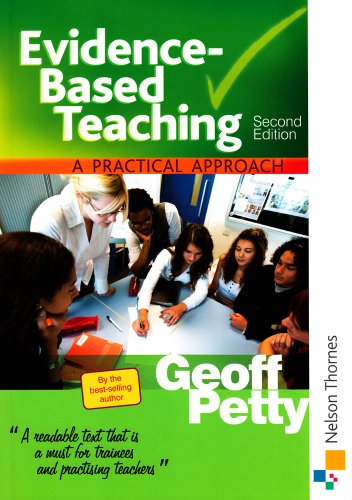
Evidence Based Teaching by Geoff Petty
"...Evidence Based Teaching is for teachers with some experience. It makes use of the most rigorous research on what has the biggest impact on achievement, and shows how to use this in your teaching..." from the EBT website
Geoff Petty analyses the collection of research by Marzano from America and John Hattie from New Zealand in terms of the effect on learning. You will be surprised as some common myths are shown to be not so relevant (class size, finance etc) and less surprised at the methods that are the most effective.
This book also looks at how to make best use of these methods and further how to conduct evidence based research in your own classroom so that you improve the learning of the your children. For anyone with a thirst for more educational insight. Easy to access and understand. This is a must for anyone's educational library.

Friday, May 31, 2013
Educational Blog Recommendation
Blogs are hard to keep up to date with. Here are my recommendations of educational blogs worth reading.
Edutopia
Edutopia has a lot in it. It is a huge site with article after article of the quality that you would normally find on a pay site. But this is the George Lucas Foundation education site and his philanthropic gesture (alongside Bill Gates and others) is essential in the current climate of education reform both in the UK and the USA. Education is currently stuck in a rut focused quintessentially on standards, measuring children against these standards and then beating them into submission with the results. Anybody, with even a smidgen of an academic brain about them, knows that the education system must change in order to prepare our children for the future. Edutopia is out there spreading the word. Quality reading around the right ideas.
Some good articles worth checking out:
http://www.edutopia.org/blog/summer-reading-for-educators-2013-mark-phillips - Summer reading
http://www.edutopia.org/blog/tech-in-schools-defining-terms-matt-levinson - Technology in Schools terminology.
http://www.edutopia.org/schools-that-work?page=1 - Schools that work
Some good articles worth checking out:
http://www.edutopia.org/blog/summer-reading-for-educators-2013-mark-phillips - Summer reading
http://www.edutopia.org/blog/tech-in-schools-defining-terms-matt-levinson - Technology in Schools terminology.
http://www.edutopia.org/schools-that-work?page=1 - Schools that work
Wednesday, December 26, 2012
Essential Books for Primary/Elementary School
Over the last ten years or so I have become aware of how the fashions and fads that are new initiatives have diluted many strong traditional aspects of schooling. Going back further and the classroom was alive and rich in the depth of study through the use of class readers. This was the place of some of the very best cross curricular work. Texts used year after year led to revised effective programs that taught good literacy skills whilst allowing grammar to be taught in a context. To this end, my thoughts have turned regularly to what kind of books I would like to see embedded across a school and its curriculum.
A selection of Roald Dahl books from/including: The Fantastic Mr Fox, BFG, James and The Giant Peach, Charlie and The Chocolate Factory, The Twits, Matilda, The Witches, The Magic Finger...
Beowulf - there are so many different versions but this one by Brian Pattern is accessible for children as young as seven.
The Sound Collector by Roger McGough
The Listeners by Walter De La Mare
I know an Old Lady Who Swallowed a Fly
Goodnight Moon by Mary Wise Brown
The Rattle Bag edited by SeamusHeaney and Ted Hughes
The Snowman by Raymond Briggs
Where's Wally? (various)
Magazines and Comics - as many as possible in as many places as possible
Charlotte's Web by EB White
Percy the Park Keeper by Nick Butterworth
The Iron Man by Ted Hughes
Traditional Tales including: Goldilocks and the Three Bears, The Three Billy Goats Gruff, Little Red Riding Hood, The Gingerbread Man,Cinderella, The Ugly Duckling - These need to be revisited many times so that children internalise their structures and devices. For six to eight year old children use with alternative versions such as Goldilocks and the Three Dinosaurs or Goldilocks by Allen Ahlberg.
Myths and Legends including: Theseus and the Minotaur, Daedalus and Icarus,
Anything by Michael Rosen
Captain Underpants by Dav Pilkey
Lots by Julia Donaldson like The Gruffalo and The Snail and The Whale.
Holes, There's a Boy in the Girl's Bathroom by Louis Sachar
The Secret Garden by Frances Hodgson Burnett
This is far from a comprehensive list and I have realised that it will need to be developed and refined over time. These texts should be incorporated through a number of platforms within the school including:
A selection of Roald Dahl books from/including: The Fantastic Mr Fox, BFG, James and The Giant Peach, Charlie and The Chocolate Factory, The Twits, Matilda, The Witches, The Magic Finger...
Beowulf - there are so many different versions but this one by Brian Pattern is accessible for children as young as seven.
 |
| Clockwork by Philip Pullman |
 |
| Jabberwocky by CS Lewis |
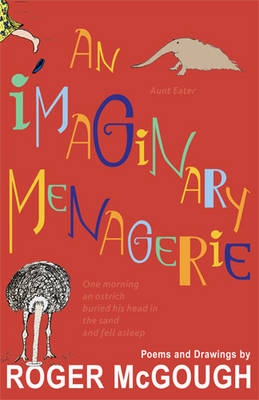 |
| Poetry by Roger McGough |
The Sound Collector by Roger McGough
The Listeners by Walter De La Mare
I know an Old Lady Who Swallowed a Fly
Goodnight Moon by Mary Wise Brown
 |
| The Very Hungry Caterpillar by Eric Carle |
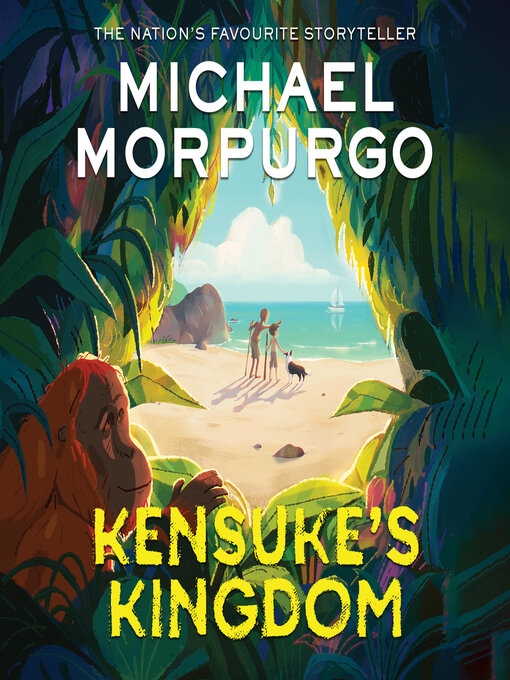 |
| Kensuke's Kingdom by Michael Morporgo |
 |
| The Rainbow Fish by Marcus Pfister |
 |
| The Mixed up Chameleon by Eric Carle |
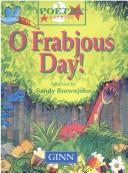 |
| Oh Fabjous Day Collected by Sandy Brownjohn |
 |
| Flat Stanley by Jeff Brown |
 |
| The Guard Dog by Dick King Smith |
 |
| The Hodgeheg by Dick King Smith |
The Rattle Bag edited by SeamusHeaney and Ted Hughes
The Snowman by Raymond Briggs
Where's Wally? (various)
Magazines and Comics - as many as possible in as many places as possible
Charlotte's Web by EB White
Percy the Park Keeper by Nick Butterworth
The Iron Man by Ted Hughes
Traditional Tales including: Goldilocks and the Three Bears, The Three Billy Goats Gruff, Little Red Riding Hood, The Gingerbread Man,Cinderella, The Ugly Duckling - These need to be revisited many times so that children internalise their structures and devices. For six to eight year old children use with alternative versions such as Goldilocks and the Three Dinosaurs or Goldilocks by Allen Ahlberg.
Myths and Legends including: Theseus and the Minotaur, Daedalus and Icarus,
 | |
| The Curious Incident of the Dog in the Nighttime | by Mark Haddon |
 |
| Treasure Island by Robert Lewis Stevenson |
 |
Silly Verse for Kids by Spike Milligan |
 |
| Five Children and It by E Nesbit |
Lots by Julia Donaldson like The Gruffalo and The Snail and The Whale.
Holes, There's a Boy in the Girl's Bathroom by Louis Sachar
The Secret Garden by Frances Hodgson Burnett
This is far from a comprehensive list and I have realised that it will need to be developed and refined over time. These texts should be incorporated through a number of platforms within the school including:
- class reader
- guided reader
- shared reader
- class library
- school library
- recommendations list
- holiday reading list
- extended reading list
- home reader
Friday, August 31, 2012
Staying Safe in ICT (ICT New Curriculum - First Unit)
There are two main disciplines of school based ICT:
- Technology as a tool for enhancing education
- Computer Science
Our school is moving away from ICT as a completely discrete subject with a computer science bias to focus more on the sue of ICT as tool for enhancing teaching and learning. The two disciplines will always overlap as in the first unit of learning of the year which always needs to be Health and Safety in ICT.
Here are my Programs of Work for Year 5 and Year 6
Tuesday, February 21, 2012
Learning and Teaching: Reflection 1 (Learning)
I am currently part of a working party developing the Learning and Teaching Policy across our International School Intelligent School
To guide my thinking I am considering a number of questions. At our first meeting we discussed the questions:
I see the first two as being connected or similar. How effective relates to assessing the learning of the students and students progress also relates to assessing the students learning. Shirley Clarke sees the answer to these questions as formative assessment techniques that the student is in control of or that the student own. Active learning involving understanding what is trying to be learnt and what are the different markers of success. If the students understand this then they can reflect (individually, in peers or even whole class) on their learning and establish progress or the effectiveness of the lesson.
Clarke establishes learning as an active process and is something that can be improved. Learners can become better learners and in the process become more intelligent. This goes against the common grain that intelligence is fixed and can not be affected and students are either good or bad learners. Clarke draws upon the research and theories of Carol Dweck. Dweck has produced thirty years of studies to show that what is important is whether we see ability as fixed or something that can grow. TheIntelligent School
This has led me to add three more questions to the above ones:
Clarke links all these areas clearly with the various aspects of formative assessment. Learning has formative assessment as an inherent part of it. TheIntelligent School Intelligent School
Intelligence. Intelligence can be improved. There are a number of different types of intelligences as best exemplified by the Howard Gardner model. Intelligence is still predominantly seen by many in theUK
Neuroscience contributes the importance of keeping the brain healthy for learning. Further most recent research has highlighted the huge importance of speaking and listening. This must be pushed as an important part of the learning environment.
The nature of learners namely that, learners come in different shapes and sizes and there are differences in learning between girls and boys.
In conclusion it is important to be up to date in understanding the nature of learning as some of the most powerful research has been done in the last twenty five years. Learning involves careful consideration for the context but also knowing how to learn. Further learners need to actively make sense of what has been learnt through review and reflection.
To guide my thinking I am considering a number of questions. At our first meeting we discussed the questions:
- How effective is the way I teach in maximizing my students learning.
- How well have the students progressed in my lesson?
- Can I do something different that will improve my students learning?
I see the first two as being connected or similar. How effective relates to assessing the learning of the students and students progress also relates to assessing the students learning. Shirley Clarke sees the answer to these questions as formative assessment techniques that the student is in control of or that the student own. Active learning involving understanding what is trying to be learnt and what are the different markers of success. If the students understand this then they can reflect (individually, in peers or even whole class) on their learning and establish progress or the effectiveness of the lesson.
Clarke establishes learning as an active process and is something that can be improved. Learners can become better learners and in the process become more intelligent. This goes against the common grain that intelligence is fixed and can not be affected and students are either good or bad learners. Clarke draws upon the research and theories of Carol Dweck. Dweck has produced thirty years of studies to show that what is important is whether we see ability as fixed or something that can grow. The
This has led me to add three more questions to the above ones:
- How can I help the students become better learners?
- How will/were the students learn(ing) in my lesson?
- What is learning?
Resilience: | Absorption, managing distractions, noticing and perseverance |
Resourcefulness: | Questioning, making links, imagining, reasoning, and capitalizing |
Reflectiveness: | Planning, revising, distilling and meta-learning |
Reciprocity: | Interdependence, collaboration, empathy and listening, imitation |
Clarke links all these areas clearly with the various aspects of formative assessment. Learning has formative assessment as an inherent part of it. The
- their goals for learning;
- the strategies they are using to learn;
- how they feel about their learning;
- what the outcomes of their learning are.
- constructivist (children use prior knowledge to make meaning of currently learning
- social (learning is improved by interaction with peers and teacher)
- learners learn at different rates
Intelligence. Intelligence can be improved. There are a number of different types of intelligences as best exemplified by the Howard Gardner model. Intelligence is still predominantly seen by many in the
Neuroscience contributes the importance of keeping the brain healthy for learning. Further most recent research has highlighted the huge importance of speaking and listening. This must be pushed as an important part of the learning environment.
The nature of learners namely that, learners come in different shapes and sizes and there are differences in learning between girls and boys.
In conclusion it is important to be up to date in understanding the nature of learning as some of the most powerful research has been done in the last twenty five years. Learning involves careful consideration for the context but also knowing how to learn. Further learners need to actively make sense of what has been learnt through review and reflection.
Monday, February 20, 2012
New ICT Curriculum
Today has seen the emergence of my new curriculum. It is the first draft of the curriculum in a form close to what it will look like when finished. This curriculum is a response to the archaic QCA planning in existence in many schools that use the English National Curriculum as its basis. I work at an International School and inherited an ICT curriculum and department in the primary school that was in a minimal state. Four years down the line I have tried a number of innovative uses of ICT, and alongside a redesign of the curriculum into one that is cross curricular in its delivery, I have put together an ICT curriculum that more closely mirrors technology as it is used today. Further the curriculum looks to the future. Skills that will become the common threads of future English curriculum are here: collaboration, problem solving, critical thinking, communication and creativity.
The Curriculum Map can be found here.
The next stages will be to use this document to create some year group defined maps that will share the learning across the school. Further I will then match up the assessment rubrics that I have been working on and how they can be used.
The Curriculum Map can be found here.
The next stages will be to use this document to create some year group defined maps that will share the learning across the school. Further I will then match up the assessment rubrics that I have been working on and how they can be used.
Sunday, February 12, 2012
Formative Assessment in ICT
Having recently embarked upon the use of rubrics in ICT, I have come to recognise the true power of formative assessment. Sharing rubrics with children whilst teaching them the skill subsets that will allow them to produce high quality pieces of work has shown that using assessment as learning not only has an immense impact on learning but can also save the teacher a lot of time planning for differentiation.
A rubric is a grid of statements of differing levels of competency. The teacher or in this case the children can match up their work with the statements and then take the overall picture to show what level they are working at. Furthermore, children can see which statements they have rated themselves weak at and are then able to set them selves targets for their learning.
As I used the rubrics this week I started to hear the same target from many of my year 5 children. "I need to add more links to my website." This informed me of where I needed to take my teaching the following week.
To get to this stage I started by looking at the attainment levels for ICT. I looked a the differences between level 3, level 4 and level 5. What I immediately realised was that the statements didn't tackle the concepts I was dealing with in blogging, building websites and collaboration. What I did then was to deconstruct the attainment statements. Through this deconstruction I could see the fundamental differences between these three levels. Level 3 inherently deals with being able to complete or use ICT concepts as directed by the teacher. Level 4 is the standard level of proficiency for carrying out ICT work. Children can use search engines, complete excel formula, create graphs, write a sequence of instructions or use a MS office program without constant direction or guidance. Level 5 involved a greater sophistication and understanding of the same things. The student was able to use their skills and apply them to different situations. The work they produced showed an understanding of the audience and demonstrated the skills used to their maximum potential.
Having stripped these three levels of attainment down to their bare bones I was able to start to build rubrics for each of the new elements of ICT planning using my new insights into the attainment levels. My first attempts successfully split the attainment into aspects and then further into three standards of attainment - level 3, level 4 and level 5. I used these with my year six children for a while. At the same time I had been teaching the Year Five children from the opposite direction by slowly building up their skills. I came to a halt with these children and realised I needed to share attainment ideas with them. This time though I set it as a class task. I identified the different skills we had been working on for building their website: adding pictures, adding text, using columns, adding pages, adding a blog and the quality of the writing on the website. From these headings I asked the children to work in pairs and discuss with their partner what would be at the level, below the level and above the level for each of these aspects. The children folded a piece of paper three ways and produced columns of statements under the headings: working below the level expected, working at the level expected and working above the level expected. We collated the results as a class and I used these to create a child friendly version of the rubric I had started with.
I have used rubrics in the middle of topics and they helped the children to understand what was required. Further, I have used them at the end of the topic as a peer assessment tool. The children worked in groups or individually to make judgments about the other children's websites. After the children had done this and quite accurately assessed their peers websites they could also identify what they themselves needed to do next with their own website. Assessment AS learning!
A rubric is a grid of statements of differing levels of competency. The teacher or in this case the children can match up their work with the statements and then take the overall picture to show what level they are working at. Furthermore, children can see which statements they have rated themselves weak at and are then able to set them selves targets for their learning.
As I used the rubrics this week I started to hear the same target from many of my year 5 children. "I need to add more links to my website." This informed me of where I needed to take my teaching the following week.
To get to this stage I started by looking at the attainment levels for ICT. I looked a the differences between level 3, level 4 and level 5. What I immediately realised was that the statements didn't tackle the concepts I was dealing with in blogging, building websites and collaboration. What I did then was to deconstruct the attainment statements. Through this deconstruction I could see the fundamental differences between these three levels. Level 3 inherently deals with being able to complete or use ICT concepts as directed by the teacher. Level 4 is the standard level of proficiency for carrying out ICT work. Children can use search engines, complete excel formula, create graphs, write a sequence of instructions or use a MS office program without constant direction or guidance. Level 5 involved a greater sophistication and understanding of the same things. The student was able to use their skills and apply them to different situations. The work they produced showed an understanding of the audience and demonstrated the skills used to their maximum potential.
Having stripped these three levels of attainment down to their bare bones I was able to start to build rubrics for each of the new elements of ICT planning using my new insights into the attainment levels. My first attempts successfully split the attainment into aspects and then further into three standards of attainment - level 3, level 4 and level 5. I used these with my year six children for a while. At the same time I had been teaching the Year Five children from the opposite direction by slowly building up their skills. I came to a halt with these children and realised I needed to share attainment ideas with them. This time though I set it as a class task. I identified the different skills we had been working on for building their website: adding pictures, adding text, using columns, adding pages, adding a blog and the quality of the writing on the website. From these headings I asked the children to work in pairs and discuss with their partner what would be at the level, below the level and above the level for each of these aspects. The children folded a piece of paper three ways and produced columns of statements under the headings: working below the level expected, working at the level expected and working above the level expected. We collated the results as a class and I used these to create a child friendly version of the rubric I had started with.
I have used rubrics in the middle of topics and they helped the children to understand what was required. Further, I have used them at the end of the topic as a peer assessment tool. The children worked in groups or individually to make judgments about the other children's websites. After the children had done this and quite accurately assessed their peers websites they could also identify what they themselves needed to do next with their own website. Assessment AS learning!
Tuesday, January 17, 2012
Leap of Faith: New ICT Curriculum
I, like the vast majority of English National Curriculum ICT teachers around the world, have long known that the QCA based scheme of work and the derivatives there of, was outdated and out of touch with today's technologies and innovations. Web 2.0 is a well worn phrase but has not not had more than a passing mention in the Cambridge GCSE syllabus. Netbooks and many different hand held devices from PSPs, Nintendos, tablets to smart phones and mp3 players.
Over the two and a half years I have used a variety of websites and blogs to learn about and update my own ICT knowledge. I started way back with the ground breaking Cool Tools for Schools. This alone was able to give structure to my explorations and directed me towards tools that were so useful and accessible. More recently I have become an avid twitterer and have followed and taken note of John Mclear, Claire Lotriet, Julie Skinner, Simfin, Dean Shareski, Phil Bagge, Simon Haughton and Ian Addison alongside many others. In particular Ian's curriculum at the end which made me recognise that I had put into place the majority of ingredients that I needed.
For the last four years I have been teaching ICT knowing that it was stale and not where I wanted to be but I also didn't have that clear picture. Now as the ingredients have come together and more importantly as the cloud ware has been made available free of charge or with a really reasonable minimal charge, my curriculum has started to take shape. I still will retain its core areas of data handling, finding out and collecting and presenting information, but I will add more digital media that will open up and invigorate the rest of the curriculum that it will connect with.
Here is the new curriculum overview.
Maybe this is not a leap of faith at all. In actual fact the bridge that will take the teachers to a better curriculum is there. Watch this space.
Friday, November 18, 2011
In the Zone: Characteristics of Scaffolded Learners
I have always like the expression 'In the Zone'. A statement that refers to a flow of actions or thinking where each is done in an optimal if not peak performing way. Sports people are often described as 'in the zone' when they are performing on the field, court or track consistently at their best.
 The best example of this was game 5 of the Eastern Conference Finals for Basketball in 1994. The New York Nicks vs. The Indiana Pacers. After each team won the home games from the first two matches, The Pacers visited The Nicks at Madison Square Garden in New York. The game looked to be going the Nicks way until the Pacers star man Reggie Miller got 'in the zone'. He scored 39 points in the game but 25 of them came in the 4th quarter to give the Pacers a 93-86 victory. With Reggie in the zone he was scoring from all over the court, particularly with every long 3 point throw going through the hoop. There is one moment where he intercepts the ball and in a split second turns and steps out of the area in order to shoot (and score) 3 points.
How does this translate to learning? The expression 'in the zone' evokes thoughts of Vygotsky's zone of proximal development. This zone represents the edge of a child's learning; the limits of his or her constructions of what they understand of the world. If children are taught with this in mind the content of a lesson is planned to where the child is at. A child's personal learning is considered. Learning is scaffolded to support and fit around the child's developmental zone of proximal learning.
What does a child look like when they are learning in their zone?
Characteristics of children 'in the zone'
Children:
I suppose in the analogy with Reggie Miller 'in the zone' then surely that makes Spike Lee the bad teacher?
How does this translate to learning? The expression 'in the zone' evokes thoughts of Vygotsky's zone of proximal development. This zone represents the edge of a child's learning; the limits of his or her constructions of what they understand of the world. If children are taught with this in mind the content of a lesson is planned to where the child is at. A child's personal learning is considered. Learning is scaffolded to support and fit around the child's developmental zone of proximal learning.
What does a child look like when they are learning in their zone?
Characteristics of children 'in the zone'
Children:
- are excited and on task
- have a clear understanding of what they are learning
- feel comfortably challenged
- are able to act independently of the teacher
- can identify the relevant skills or knowledge they already possess that relates to the learning experience
- know how to find support to parts of the learning that is difficult
- are 'in the zone' in relation to the stage of development they are at

I suppose in the analogy with Reggie Miller 'in the zone' then surely that makes Spike Lee the bad teacher?
Friday, October 28, 2011
Schools of Tomorrow: Part 1 - Play
“It is paradoxical that many educators and parents still differentiate between a time for learning and a time for play without seeing the vital connection between them.” ~ Leo Buscaglia (author, educator)Following on from my last post that concerned play in the EYFS, I want to turn my attention to play as we go up through the primary school. Play should be ever constant in the primary school; all the way up to year 6.
“The most effective kind of education is that a child should play amongst lovely things.” ~ Plato (Greek philosopher)It is not play for play's sake. This kind of play needs careful structuring. Or, rather than structuring, it needs nurturing.
Play should be of different types:
- playing with each other
- playing with toys
- playing roles
- talk in play
- playing sporting games
- making up games to play
“It is becoming increasingly clear through research on the brain, as well as in other areas of study, that childhood needs play. Play acts as a forward feed mechanism into courageous, creative, rigorous thinking in adulthood.” ~ Tina Bruce (Professor, London Metropolitan University)Playing with toys involves all of the rules and routines that go with it. Children learn to play by a set of conditions. These conditions are not always pleasurable. If you take the game of snakes and ladders and watch as a child hits that square that has the head of the snake. Children often shake their heads and show denial. Children will miscount their die throw or if the finishing square is in sight, a slide down the snakes head can be enough to upset the balance and game. Counters and die can be upturned in one swift tantrum. Surely having children become comfortable with the pitfalls of games makes the first foundation for the ups and downs of life.
Playing Roles whether in the wendy house, imaginary school or further playing the roles linked to the theme currently being studied: all prepare children to step into other people's shoes. Play with inherent roles must be carefully set-up and also must push children to play in those roles that they are unfamiliar with. These roles can be extended further into the fun hot-seating that goes on as the children get older and are able to explore fiction with developed characters in it.
“As astronauts and space travellers children puzzle over the future; as dinosaurs and princesses they unearth the past. As weather reporters and restaurant workers they make sense of reality; as monsters and gremlins they make sense of the unreal.” ~ Gretchen Owocki (childhood educator)Talk in Play should not be left to chance. As educators we should be scaffolding or supporting talk so that it is useful or purposeful. Setting up a shop is not enough. Children given parts of dialogue will more enthusiastically throw themselves into play. Teachers must lead by modelling the importance of the words spoken in play and this will promote its place in play. Children will not just want to wear the best 'policeman's' hat but will want to say the lines of dialogue explaining to their fellow classmate why they have just been arrested.(This dialogue helps to support any writing based on the theme of the play). Higher up, children given the right words in team games will help to motivate and encourage their team to work together.
Playing Sporting Games builds upon many of the same principals mentioned above. Children have to accept their part in a large group whilst developing the physical coordination that they can use throughout their lives. Individuals again have to conform to the rules whilst relying on another. Basic principals that govern many of our working and social situations.
Making up Games to Play is vastly underestimated in the modern school. It doesn't happen spontaneously. It has to be built upon the basics of game play from the regular use of games in school. Games with the elements and rules identified and taken apart. Again laying a scaffolding for the children forming their own games. This leads to good level of creativity.
“Almost all creativity involves purposeful play.” ~ Abraham Maslow (psychologist)The proposal that play belongs across the whole of the primary school can be taken a whole stage further. Educationalists across the world are promoting the place of the computer game in the classroom. Both as a motivator and as a more complex combination of skills brought together. Latest research also shows that those adults that engage in regular 'game play' such as chess, soduku or crosswords, live with their marbles in tact to a much brighter age.
“Play is the highest form of research.” ~ Albert Einstein (scientist)What is play like in your school? Start with a play audit. Identify where it occurs and to what extent it is structured. From there you will be able to target areas of play for development. Time set aside will ensure that the planning. scaffolding or structuring can be done in a thorough way. Then all there will be left to do is for the children to play.
“It’s not so much what children learn through play, but what they won’t learn if we don’t give them the chance to play. Many functional skills like literacy and arithmetic can be learned either through play or through instruction – the issue is the amount of stress on the child. However, many coping skills like compassion, self-regulation, self-confidence, the habit of active engagement, and the motivation to learn and be literate cannot be instructed. They can only be learned through self-directed experience (i.e. play). ~ Susan J. Oliver (author, Playing for Keeps)
Subscribe to:
Posts (Atom)