Showing posts with label young children. Show all posts

Wednesday, December 26, 2012

Essential Books for Primary/Elementary School

Over the last ten years or so I have become aware of how the fashions and fads that are new initiatives have diluted many strong traditional aspects of schooling. Going back further and the classroom was alive and rich in the depth of study through the use of class readers. This was the place of some of the very best cross curricular work. Texts used year after year led to revised effective programs that taught good literacy skills whilst allowing grammar to be taught in a context. To this end, my thoughts have turned regularly to what kind of books I would like to see embedded across a school and its curriculum.

A selection of Roald Dahl books from/including: The Fantastic Mr Fox, BFG, James and The Giant Peach, Charlie and The Chocolate Factory, The Twits, Matilda, The Witches, The Magic Finger...

Beowulf - there are so many different versions but this one by Brian Pattern is accessible for children as young as seven.


Clockwork by Philip Pullman
Jabberwocky by CS Lewis
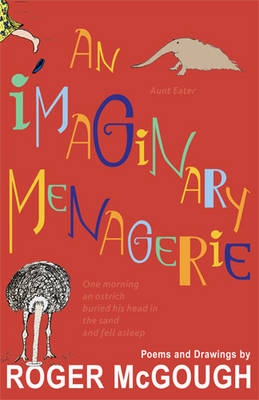
Poetry by Roger McGough


The Sound Collector by Roger McGough

The Listeners by Walter De La Mare

I know an Old Lady Who Swallowed a Fly

Goodnight Moon by Mary Wise Brown

The Very Hungry Caterpillar by Eric Carle
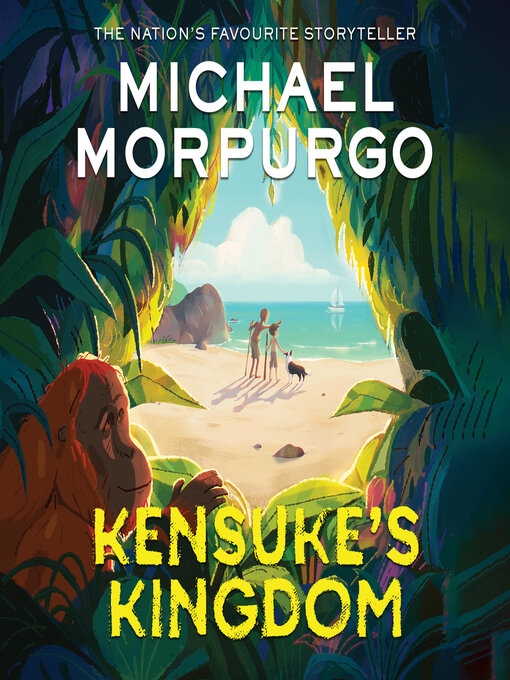
Kensuke's Kingdom by Michael Morporgo


The Rainbow Fish by Marcus Pfister


The Mixed up Chameleon by Eric Carle


Oh Fabjous Day Collected by Sandy Brownjohn


Flat Stanley by Jeff Brown


The Guard Dog by Dick King Smith
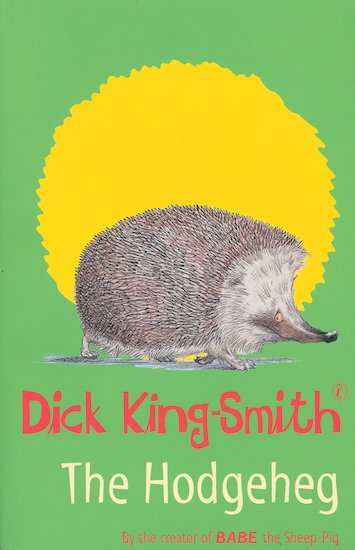
The Hodgeheg by Dick King Smith


The Rattle Bag edited by SeamusHeaney and Ted Hughes

The Snowman by Raymond Briggs

Where's Wally? (various) 

Magazines and Comics - as many as possible in as many places as possible

Charlotte's Web by EB White

Percy the Park Keeper by Nick Butterworth

The Iron Man by Ted Hughes

Traditional Tales including: Goldilocks and the Three Bears, The Three Billy Goats Gruff, Little Red Riding Hood, The Gingerbread Man,Cinderella, The Ugly Duckling - These need to be revisited many times so that children internalise their structures and devices. For six to eight year old children use with alternative versions such as Goldilocks and the Three Dinosaurs or Goldilocks by Allen Ahlberg.

Myths and Legends including: Theseus and the Minotaur, Daedalus and Icarus,


The Curious Incident of the Dog in the Nighttime by Mark Haddon
Anything by Michael Rosen
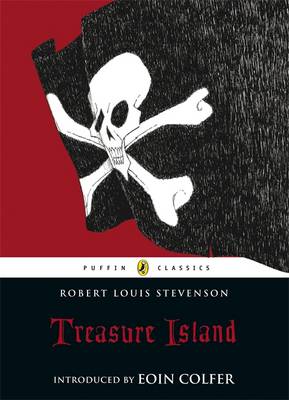
Treasure Island by Robert Lewis Stevenson

Silly Verse for Kids by Spike Milligan


Five Children and It by E Nesbit
Captain Underpants by Dav Pilkey

Lots by Julia Donaldson like The Gruffalo and The Snail and The Whale.

Holes, There's a Boy in the Girl's Bathroom by Louis Sachar

The Secret Garden by Frances Hodgson Burnett


 This is far from a comprehensive list and I have realised that it will need to be developed and refined over time. These texts should be incorporated through a number of platforms within the school including:
  • class reader
  • guided reader
  • shared reader
  • class library
  • school library
  • recommendations list
  • holiday reading list
  • extended reading list
  • home reader

Friday, July 6, 2012

Primary/Elementary Poetry and ICT = Creativity and Collaboration

Try using this poem in class. First as a paired discussion activity then moving on to creating an illustrated video with children reading the poem. See ideas at the bottom.

Miss Lotte

That Miss Lotte who was nuts;
I mean completely round the bend.
She’d wear socks on her hands
And wave them at her friends.
She’d put her dress on backwards
And odd shoes on each foot.
It was definitely more than loose,
A screw was missing from her nut.

That Miss Lotte who was loopy;
I mean completely round the twist.
She said she new double dutch
And could converse with the fish.
She ate her dinner in the bath
And drank the water from the loo.
While all around her said, she was
Completely crackers and cuckoo.

That Miss Lotte who was balmy;
I mean gaga, crazy and mad.
Told the children they could riot
In the lessons that they had.
Said they should dance on the table,
Shout out and have a laugh.
But they stood open mouthed and knowing
She was noodle brained and daft.

That Miss Lotte who is bog-eyed
Is jam-headed and mungo-jerried,
Over the rainbow, out of her mind,
Tap-doo-lally and wholly wellied.
She is actually very kind.
Although not her only feature:
That Miss Lotte who is bananas,
Is the world’s greatest teacher.


Ideas for Teaching 
  1. Identify the words that rhyme. use them to look at phonemes with the same sounds but different spellings e.g. foot and nut
  2. Draw a picture for each verse (have children work in pairs or threes to do this.)
  3. ICT Idea - Have the children illustrate parts of the poem using a simple art program. Something as easy as Paint will do this. (Tip - get the children to draw with a thick paint brush and block colour the picture for a comic strip effect) I like pixlr.com which is a photo editor.
  4. ICT idea 2 - Let the children record themselves reading/speaking the poem (use simple sound recorder on PC or audioboo or something similar)
  5. ICT idea 3 - combine the above ideas - use Windows Movie-Maker or another free alternative. My choice would be Videopad . Please not that with Video pad - you install it first and then uninstall it to revert from pro to the free version. (Further alternatives here.) Add the sound recording of the reading and the pictures that illustrate the poem. Give it a title and credits and publish to the web.
  6.  Make a list of the words for mad/crazy from the poem.
  7. Make up your own words for crazy. Try finishing these phrases. (if you get stuck add food types in the spaces)
  • Mad as a ...
  • ... - headed
  • ... - brained 
      8.  Write their own own crazy teacher/child poem using the following structure

           Write two lines using made up words for crazy (two made up words per line for the better students)
          Write four lines of crazy things they do
          Write two lines using made up words for crazy

Friday, October 28, 2011

Schools of Tomorrow: Part 1 - Play

“It is paradoxical that many educators and parents still differentiate between a time for learning and a time for play without seeing the vital connection between them.” ~ Leo Buscaglia (author, educator)
 Following on from my last post that concerned play in the EYFS, I want to turn my attention to play as we go up through the primary school. Play should be ever constant in the primary school; all the way up to year 6.
“The most effective kind of education is that a child should play amongst lovely things.” ~ Plato (Greek philosopher)
It is not play for play's sake. This kind of play needs careful structuring. Or, rather than structuring, it needs nurturing.

Play should be of different types:
  • playing with each other
  • playing with toys
  • playing roles
  • talk in play
  • playing sporting games
  • making up games to play
Playing with each other means that children have to accept others points of view. Isn't this something we, as adults, find just as difficult in the world of work. Playing with each other is the roots of team work. Team work is the essentials of the modern world of work (see next post on team work)
“It is becoming increasingly clear through research on the brain, as well as in other areas of study, that childhood needs play. Play acts as a forward feed mechanism into courageous, creative, rigorous thinking in adulthood.” ~ Tina Bruce (Professor, London Metropolitan University)
Playing with toys involves all of the rules and routines that go with it. Children learn to play by a set of conditions. These conditions are not always pleasurable. If you take the game of snakes and ladders and watch as a child hits that square that has the head of the snake. Children often shake their heads and show denial. Children will miscount their die throw or if the finishing square is in sight, a slide down the snakes head can be enough to upset the balance and game. Counters and die can be upturned in one swift tantrum. Surely having children become comfortable with the pitfalls of games makes the first foundation for the ups and downs of life.

Playing Roles whether in the wendy house, imaginary school or further playing the roles linked to the theme currently being studied: all prepare children to step into other people's shoes. Play with inherent roles must be carefully set-up and also must push children to play in those roles that they are unfamiliar with. These roles can be extended further into the fun hot-seating that goes on as the children get older and are able to explore fiction with developed characters in it.
 “As astronauts and space travellers children puzzle over the future; as dinosaurs and princesses they unearth the past. As weather reporters and restaurant workers they make sense of reality; as monsters and gremlins they make sense of the unreal.” ~ Gretchen Owocki (childhood educator)
Talk in Play should not be left to chance. As educators we should be scaffolding or supporting talk so that it is useful or purposeful. Setting up a shop is not enough. Children given parts of dialogue will more enthusiastically throw themselves into play. Teachers must lead by modelling the importance of the words spoken in play and this will promote its place in play. Children will not just want to wear the best 'policeman's' hat but will want to say the lines of dialogue explaining to their fellow classmate why they have just been arrested.(This dialogue helps to support any writing based on the theme of the play). Higher up, children given the right words in team games will help to motivate and encourage their team to work together.

Playing Sporting Games builds upon many of the same principals mentioned above. Children have to accept their part in a large group whilst developing the physical coordination that they can use throughout their lives. Individuals again have to conform to the rules whilst relying on another. Basic principals that govern many of our working and social situations.

Making up Games to Play is vastly underestimated in the modern school. It doesn't happen spontaneously. It has to be built upon the basics of game play from the  regular use of games in school. Games with the elements and rules identified and taken apart. Again laying a scaffolding for the children forming their own games. This leads to good level of creativity.
“Almost all creativity involves purposeful play.” ~ Abraham Maslow (psychologist)
The proposal that play belongs across the whole of the primary school can be taken a whole stage further. Educationalists across the world are promoting the place of the computer game in the classroom. Both as a motivator and as a more complex combination of skills brought together. Latest research also shows that those adults that engage in regular 'game play' such as chess, soduku or crosswords, live with their marbles in tact to a much brighter age.
 “Play is the highest form of research.” ~ Albert Einstein (scientist)
What is play like in your school? Start with a play audit. Identify where it occurs and to what extent it is structured. From there you will be able to target areas of play for development. Time set aside will ensure that the planning. scaffolding or structuring can be done in a thorough way. Then all there will be left to do is for the children to play.
“It’s not so much what children learn through play, but what they won’t learn if we don’t give them the chance to play. Many functional skills like literacy and  arithmetic can be learned either through play or through instruction – the issue is the amount of stress on the child. However, many coping skills like compassion, self-regulation, self-confidence, the habit of active engagement, and the motivation to learn and be literate cannot be instructed. They can only be learned through self-directed experience (i.e. play). ~ Susan J. Oliver (author, Playing for Keeps)

Thursday, October 20, 2011

I'm sure I went to 'playschool' rather than Nursery.

My daughter, who is almost two years of age, currently goes to a Nursery. At some point in the next twelve months, my wife and I will probably sit down to decide whether or when to move her to the pre-school at the primary school. This is a place I know well as I work in KS1 and 2 in the primary.

This pre-school (like a number that I have witnessed), has a formal feel to it. The room is a reflection of the latter stages of primary schooling with its set number of tables (often five) that six children can sit round. This structure then leads to stale lessons with children sat in their chairs all day. This seems an inescapable consequence in current secondary eduction but do we need to resort to it in primaries? It is definitely not a pre-school regime I want my child to go through but what do other people think?

This blog post by Frank Chalk promotes the opposite to what I suggest. It states that children should be moved into a formal setting as soon as possible. What is interesting is some of the comments that are added to the post.

A couple of comments point out the Finish model, which is recognised as the current number one model of best practice, where children don't start any kind of formal education to the age of six.

But a number of comments support this view:

"...I just felt that the teacher should be stood at the front teaching them, otherwise why do you need a teacher at all?..."

"...I want my child taught to read, write, sit still and listen by an intelligent teacher...."


We have to recognise that there are a percentage of our pupils' parents that may feel this way. (These were two out of fourteen comments so I make it about 15%) If we have some parents that think this way we have to look at why?

'Play' is the term that confuses them. Play to these parents just means children left to their own devices. Successful play in the pre-school though refers to the areas of learning carefully crafted by the teacher. Areas include construction, role-play, art, literacy, numeracy and a tactile area. These areas are centred around themes and are refreshed more than once a week. This is the play that is often referred to but 'play' used as a term by a teacher and 'play' as perceived by the everyday parent are two different concepts.


I recall my early years before I joined school in year one. I went to a playschool. Till this day the images of that time are some of the strongest I have of my pre-school years. (These and filling my Wellingtons with drain water - eugh!) When I visit my child's nursery I see those different areas carefully crafted and I know that it is this 'play' that I want my child to learn through as long as possible.


Further reading:


BBC article 1
BBC article 2
Scholastic education poll of opinion

Tuesday, August 23, 2011

Writing an Alphabet Poem

A simple poem structure can still let you, as the teacher, explore a number of poetic elements. Here I look at using the alphabet poem. Often thought of as over simplistic, this poem will grab all of your students' attention. They will laugh outloud as they explore the different sound effects. All writers, from the weakest to the most boyish, will be happy to have a go.The individual lines are sophisticated enough to stretch the most able of children.You will find the poem linked below with a writing scaffolding template linked as well. Alternatively I have often just put the first few lines on the board (IWB or hand--written) and the structure speaks for itself.

Start a lesson by asking children if they have ever made a sound for a gun while playing a game. Go around the class listening to suggested sounds and phonetically transcribe the sounds on the board for all to see.

Introduce the next poem as about an alien that comes to earth in a spaceship and shoots lots of different things before returning to space. Ask the children to think about the size of the things that the Gwolsh shoots and to decide if this might give an idea to the size of the Gwolsh.

Read A Gwolsh with a Gun by Tricky McDee.

Using the Poem

  1. Look at the structure of the poem - identify the alphabetic pattern
  2. Look at the pattern from line to line where the alphabetic pattern starts (sound effect first word, three words of alliteration, animal/object in the middle of line, effect or what happens on the end)
  3. Spot changes to the pattern - does it matter?
  4. Write their own part to the poem using the writing scaffolding frame here
  5. older or higher ability children can attempt the writing scaffolding without seeing the original poem
Follow Up

Sound effects are for saying out loud. The children should read the poems putting as much effort into making their sound effect words as possible.

Saturday, August 20, 2011

Larry's Helmet: Poem and Resources 6-11 yrs of Age


Larry’s Helmet


Larry had a helmet.
He brought it into school.
We all crowded round him,
Thought he looked so cool.
But when you put it on,
It was the strangest of things.
Weird ideas in your head.
New powers at your fingers.

You could make it fire out
Orange lasers at your friends.
Teleport them to the roof,
Till they accept your demands.
Invisibly walk around
Pushing little ‘uns out your way.
Make them think a monster
Had descended on their day.

But the thing I liked the most
Was the timely teacher test.
A smack around the head was when
The helmet worked the best.
 
Larry's Helmet is a poem by children's poet Tricky McDee. It is a poem that rhymes and that rhyme scheme can be explored. A good source of discussion is whether lines 6 and 8 rhyme. Older children can be introduced to the term half rhyme and could brainstorm half rhyme pairs on their table wipe-boards. 'ing' would be a good place to start with half rhyme creation.

Although Larry's Helmet contains rhyme, it does not mean it needs rhyme to make it a poem. This point must be stressed when teaching. This can be reinforced by asking the children to write their own poems. I will advocate a structured procedure below, but if you have children that understand and appreciate poetry writing, then don't tie them into this procedure. Just ask them to brainstorm around some areas before they set off writing.

The poem can be downloaded here.

6-8 Years of Age

Read the poem a couple of times. Have the children imagine they were putting the helmet on. What powers would it give them?

Write a poem by following the defined structure.
  1. Decide on a child's name and ask them to describe their helmet
  2. Write a line about what the helmet will do to their friends
  3. Write a line about what their helmet will do in class
  4. Write a line about a good/bad thing that the helmet will do (depends on the bias of the first two lines - third should be opposite)
  5. Write a line about when the helmet works the best
For the younger children or in an ESL setting I would brainstorm each of these on the whiteboard; writing the answers given by the children in note form. The lowest ability children will then be able to choose lines from each category; cutting and pasting their ideas together to form their poem.

9-11 years

I would still follow the above structure but ask the children to write rhyming paired lines for each of the lines above. I would also ask the children to consider each of the senses to add depth to the poem. (Consider sight and add a colour - if it fits, consider sound and a suitable adjective.)

Follow up

The writing process should be:
  • think
  • write
  • edit
  • re-draft
  • final draft
Above we covered think and write. The children should be given the opportunity to re-draft and finally do a presentation piece on a regular basis. (At least once every three weeks.) I like to use line guides behind plain white paper. Once they have written it out on paper, ensure they give their work a title and include a design or illustration or illustrated border.


Thursday, August 18, 2011

Original Authors from the Age of Six

We ask children from a very young age to produce writing. Producing writing is, in itself, a complicated art form. Further, we ask children (as young as six years of age!) to produce original works of fiction.

Not that long ago, many teachers still asked children to produce a piece of writing from just a title starting point - 'A Snowy Day' or 'My Holiday Adventure'! Astoundingly many children would go away and do this and I imagine that there are some successful and sophisticated authors out there who started out in early schooling this way.

Teaching children to write from a young age can be an arduous task. It can feel like you are having to write each line with every child: identifying spelling mistake after spelling mistake in each un-punctuated line; marking the sentences where exciting vocabulary needs to be inserted into the sentence to raise the level of the piece; and then asking them to write 'a little bit more'.

Here at 'House of Teacher' we believe that young children can write but must start of doing so in a highly structured way. When talking about structure we may refer to scaffolding. Scaffolding is put up while a the foundations are laid for a new building. Once it can stand on its own , the scaffolding is taken away. Scaffolding writing takes many different forms from resources and pedagogy to active learning and traditional repetition. Whatever the strategy, the aim is always to produce a happy writer.